
Pind Daan in Gaya: Complete Step-by-Step Guide for 2026
Everything you need to know about performing Pind Daan in Gaya — what it is, why Gaya is sacred, the complete ritual process, required documents, cost breakdown, and how to book verified Pandits.
What is Pind Daan?
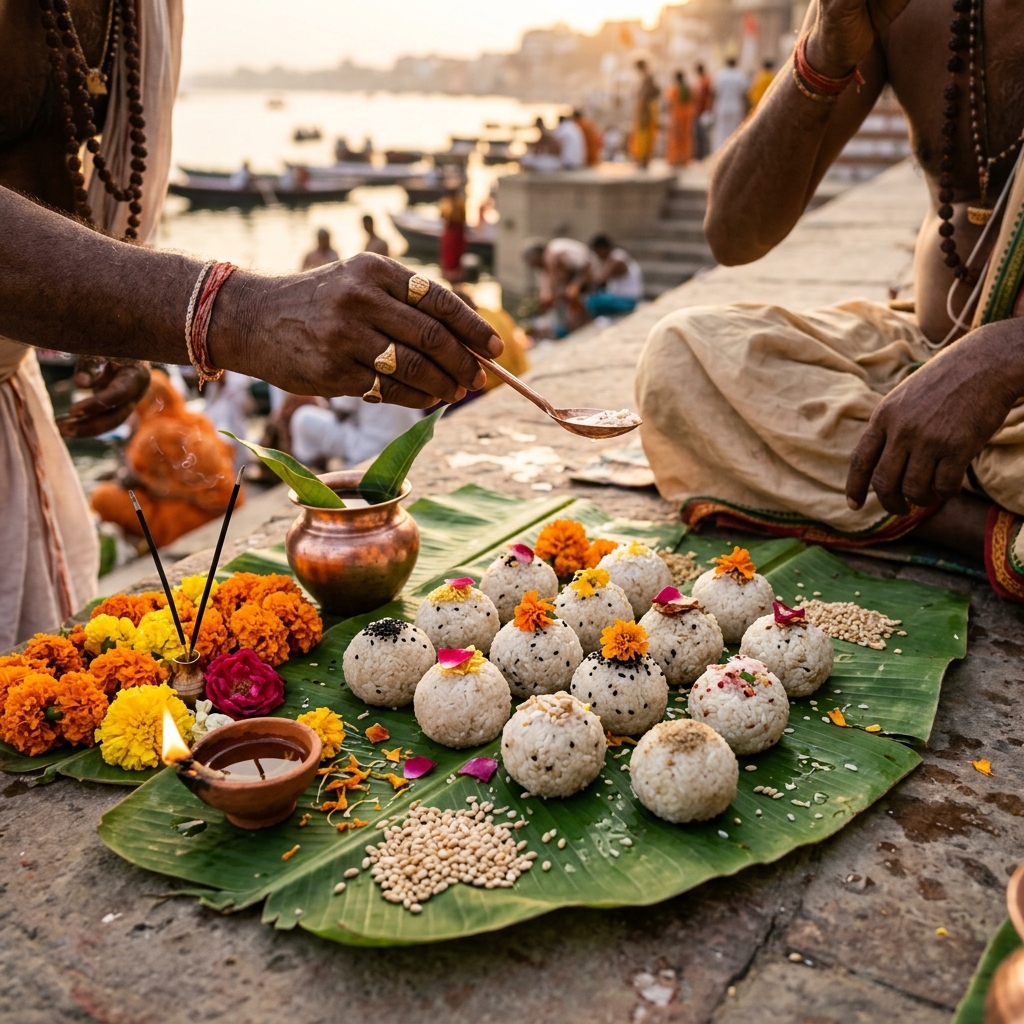
Pind Daan is one of the most sacred ancestral rites in the Hindu tradition. The word Pind refers to a ball made of cooked rice, barley flour, sesame seeds, honey, and ghee — representing the body of the departed soul. Daan means to offer or donate. Together, Pind Daan literally means "offering the body to the ancestors."
This ritual is performed to:
- Release the souls of departed ancestors from the cycle of rebirth
- Satisfy Pitrus (ancestors) so they can attain Moksha (final liberation)
- Resolve Pitru Dosha — ancestral karmic debts that affect the living family
- Repay the three primary debts (Rinn) every Hindu owes: to God, to sages, and to ancestors
According to the Garuda Purana and Vayu Purana, a soul that does not receive proper ancestral rites roams as a spirit (Preta) unable to progress spiritually. Pind Daan is the act that ensures a departed soul completes its journey to Pitru Loka (ancestral realm) or directly to Vaikuntha (the abode of Lord Vishnu).
Why is Gaya the Most Important Place for Pind Daan?
Not all places are equal for ancestral rituals. While Shradh can be performed at home, at the banks of the Ganga, or in Varanasi, Gaya in Bihar is uniquely blessed and scripturally superior for the following reasons:
### 1. The Blessing of Lord Vishnu
According to the Vayu Purana (Chapter 82), the demon Gayasur performed intense penance and was granted a boon that anyone who touched his body would attain liberation. Lord Vishnu placed his divine foot on Gayasur's chest, and the city of Gaya was established on that sacred spot. To this day, the Vishnupad Temple enshrines the actual 40 cm footprint of Lord Vishnu in stone.
### 2. The Promise of Permanent Salvation
The scriptures state clearly: "If Pind Daan is offered to ancestors in Gaya, they are permanently satisfied and liberated — not just for one year, but for eternity." This is unlike Varanasi or Haridwar, where annual Shradh is recommended. Gaya offers one-time, permanent liberation.
### 3. The 3 Sacred Vedis — Gaya's Spiritual Triangle
The power of Gaya is concentrated at three key locations:
| Sacred Site | Significance |
|-|--|
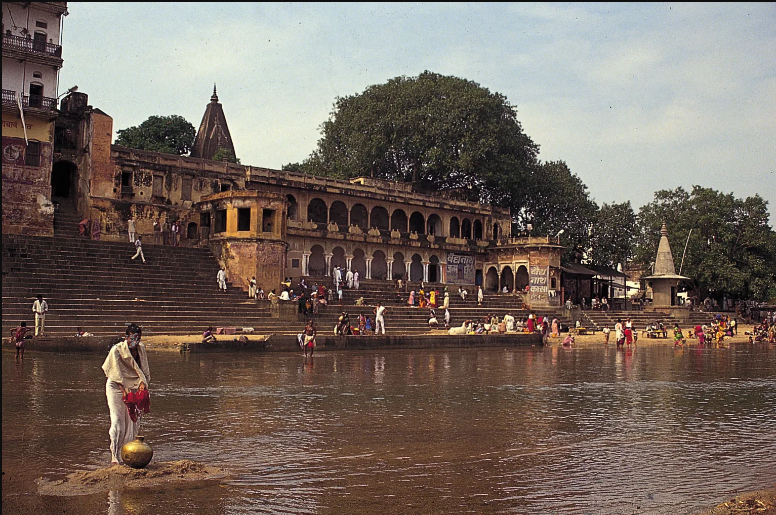
| Falgu River (Phalgu) | Where water tarpan (ancestral water offerings) are made. Lord Rama performed Shradh for his father King Dasharatha here. |
| Vishnupad Temple | The footprint of Lord Vishnu. Placing Pindas here gives direct access to Vishnu's grace. |
| Akshay Vat | The immortal Banyan tree inside Vishnupad Temple. Offering Pindas here grants Akshaya (inexhaustible) merit that never diminishes. |
### 4. The Mahabharata and Ramayana Connection
Both the Mahabharata and the Ramayana mention Gaya as the supreme site for ancestral salvation. Lord Rama himself performed Shradh for King Dasharatha at Falgu River, and the Pandavas visited Gaya to perform rites for their ancestors.
The Complete Step-by-Step Pind Daan Process
Here is the complete flow of a standard Pind Daan ceremony in Gaya, as conducted by verified Gayawal Pandits:
### Step 1: Pre-Arrival Preparation
Before arriving in Gaya, the pilgrim (Karta) should:
- Fast (Upvas): Observe at least a partial fast on the day of the ritual. Consume only fruits or simple sattvik food.
- Gather ancestor details: Collect the full name, approximate year of death, Tithi (lunar day of death), and Gotra (family lineage) of each ancestor you wish to honor.
- Clothing: Men should wear a white dhoti or simple white kurta-pajama. Women should wear a plain white or cream saree. Avoid stitched garments if possible for the ritual itself.
### Step 2: Arrival in Gaya and Sankalp (Sacred Vow)
Upon arriving at the ritual site (usually Falgu River banks or Vishnupad Temple), the Sankalp is performed first. This is the formal declaration where:
- The Pandit chants your name, your father's name, your Gotra, and the names/lineages of the ancestors you are performing the ritual for
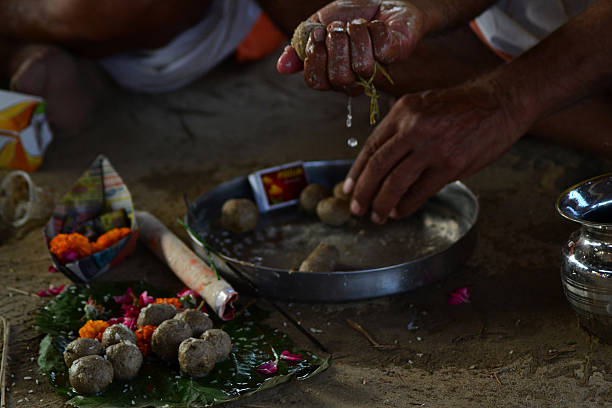
- You hold water and Kush grass in your hands during the chant, then pour it out as a symbolic surrender
This Sankalp binds the ritual to your specific family lineage and activates the ancestral connection.
### Step 3: Pinda Nirman (Making the Pindas)
The Pandit guides you in forming the Pindas:
Cooked rice or barley flour is mixed with black sesame seeds (kala til), honey, and ghee
The mixture is shaped into round balls roughly the size of a lemon
The number of Pindas depends on the number of generations being honored (typically 3 to 7 Pindas minimum)
The Pindas are placed on Kush grass spread on the ground or on stone platforms at the Vedi
### Step 4: Tarpan (Water Offerings)
Tarpan is the act of offering water mixed with black sesame seeds to the ancestors by pouring it from the right hand (or both hands) in a specific direction. This is performed:
- At the Falgu River banks first
- Later repeated at Akshay Vat and Vishnupad Temple
- Each ancestor's name is called aloud during the tarpan mantra
Tarpan is considered the drink of the ancestors — it quenches their spiritual thirst and signals to them that their descendants remember them.
### Step 5: Pinda Arpan at the 3 Core Vedis
After tarpan, the actual Pindas are offered at the three most sacred spots in Gaya:
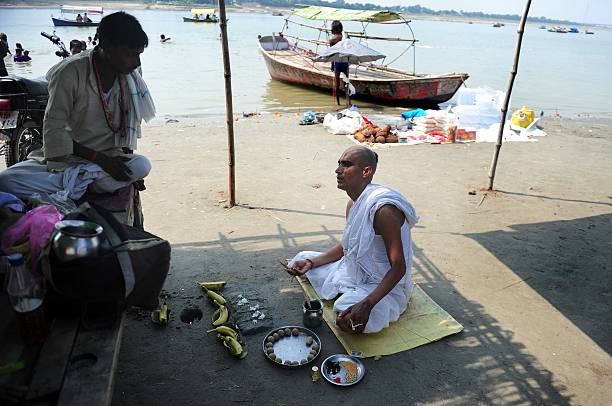
Falgu River: Pindas are placed on the sand banks or on stone platforms at the river ghats while the Pandit recites the Shradh mantras from the Garuda Purana.
Vishnupad Temple: The Pindas are placed at Lord Vishnu's footprint inside the inner sanctum. This is the most spiritually powerful step. The blessing here ensures that the ancestral soul enters Vishnu's protection.
Akshay Vat: The Pindas are offered under the immortal Banyan tree. This step provides the "seal" — ensuring the merit offered is eternal and the ancestors cannot fall back into lower realms.
### Step 6: Brahmin Bhojan (Feeding Vedic Priests)
After the ritual, Brahmin priests must be fed a full traditional meal. This is not optional — the Vedic scriptures (Manusmriti, Garuda Purana) are clear that the satisfaction of the Brahmin represents the satisfaction of the ancestor.
- A minimum of 2 Brahmins (basic) or 5-11 Brahmins (premium) are fed
- A traditional sattvik meal is served: puri, kheer, sabzi, dal, rice
- Dakshina (cash offering) and a new piece of white cloth is offered to each Brahmin
### Step 7: Final Aarti and Visarjan
The ceremony closes with:
- Aarti to Lord Vishnu at the Vishnupad Temple
- Visarjan — symbolic release of the Pindas into the Falgu River (or the water collected at the Vedi)
- Namaskar and personal prayer by the Karta and family
The ritual is now complete. The ancestors are considered fully liberated.
Required Documents and Information to Bring
You do not need government documents for the ritual itself, but you must have the following ancestral information:
| Information | Purpose |
|-||
| Your full name (Karta) | For the Sankalp declaration |
| Your Gotra (family lineage) | Identifies which Gayawal Panda holds your family registry |
| Ancestor's full name | Included in every Sankalp and Tarpan |
| Year/Tithi of ancestor's death | Used to identify which specific Pitru Paksha tithi is most auspicious |
| Village or city of ancestor's origin | Helps the Pandit verify the Bahi Khata (family registry) |
> Tip: If you do not know the Gotra or exact Tithi, our Pandits can still perform the ritual using Sarvapitri Sankalp — a universal vow that covers all ancestors of your family line across all tithis.
Pind Daan in Gaya Cost (2026 Pricing Guide)
| Package | Price Range | Includes |
||-|-|
| Economy | ₹4,500 – ₹6,500 | Pandit, basic samagri, 3 Core Vedis, feeds 2 Brahmins |
| Standard / Family | ₹7,500 – ₹12,500 | Verified Gotra Pandit, premium samagri, 7–9 Vedis, cab transport, feeds 5 Brahmins |
| Premium / VIP | ₹15,000 – ₹25,000+ | Senior Pandas, 17 Vedis over 2 days, AC cab, feeds 11 Brahmins, VIP temple entry |
| Online / Remote | ₹5,500 – ₹8,500 | Live HD stream, Pandit performs in your name at Falgu + Akshay Vat, Prasad by post |
Additional cost components:
- Puja Samagri (materials): ₹500 – ₹3,000 depending on ritual scale
- Hotel accommodation: ₹800 – ₹4,000 per night in Gaya
- Train/Flight to Gaya: Gaya Junction is directly connected to Delhi, Kolkata, Mumbai, Hyderabad, and Patna
- Local transport: ₹500 – ₹3,000 depending on number of Vedis visited
> Important: Always confirm a fixed, all-inclusive price before the ritual begins. Never agree to "extra" fees during the ceremony itself.
When to Perform Pind Daan in Gaya
The most auspicious times are:
- Pitru Paksha (September–October): The 15-day fortnight dedicated entirely to ancestral rites. Over 10 lakh pilgrims visit Gaya during this period.
- Monthly Amavasya: Every new moon day is suitable. Mahalaya Amavasya (last day of Pitru Paksha) is the most powerful.
- Solar/Lunar Eclipses: Rites performed during eclipses carry 1000x the normal spiritual merit.
- Winter months (October – February): The most comfortable time for pilgrimage due to pleasant weather (15°C – 25°C).
How to Book Pind Daan in Gaya with Gaya Rituals
Booking with us is simple and fully transparent:
1. Contact us via WhatsApp or the booking form on our website
2. Share ancestor details — names, Gotra, tithis (we help if you don't know them)
3. Choose a package — Economy, Standard, Premium, or Online
4. Receive confirmation — with exact dates, Pandit name, and all inclusions listed
5. Arrive in Gaya (or join online) — our coordinator meets you at the hotel or ghat
6. Ritual performed — with full guidance throughout
7. Receive documentation — photos, ritual video, and Prasad delivered to you
We have been coordinating authentic Pind Daan rituals in Gaya for over a decade with hundreds of satisfied families from India, USA, UK, Canada, Australia, and the Middle East.
Frequently Asked Questions
### Q: Can a woman perform Pind Daan in Gaya?
A: Yes. While traditionally the eldest son performs the Karta role, in the absence of male heirs, daughters, wives, and grandchildren can all perform the ritual. The scriptures acknowledge this provision, especially in modern times.
### Q: Can I perform Pind Daan for non-Hindu ancestors or ancestors of unknown faith?
A: The ritual is specifically a Hindu Vedic ceremony. However, if the person was born into a Hindu family and you wish to honor them, the ritual can be adapted. Our Pandits can advise based on your specific situation.
### Q: Is one visit to Gaya enough or do I need to return every year?
A: Unlike annual Shradh performed at home, Gaya Pind Daan is traditionally a one-time ritual that provides permanent liberation. Once performed correctly at the three core Vedis (Falgu, Vishnupad, and Akshay Vat), the ancestors are considered permanently satisfied and liberated.
### Q: What is the difference between Pind Daan and Tarpan?
A: Tarpan is the water offering (ancestral hydration ritual) performed first. Pind Daan is the food offering (pinda balls) performed after Tarpan. Both are components of the complete Shradh ceremony, and both are performed together in Gaya.
### Q: Can I perform Pind Daan online if I live abroad?
A: Yes. Our Online Pind Daan service connects you via HD live video stream. Our verified Pandits perform the complete ritual at the Falgu River and Akshay Vat in your name and Gotra while you participate and watch live. Prasad is shipped to your address.
Conclusion
Performing Pind Daan in Gaya is one of the most sacred duties a descendant can fulfill for their departed ancestors. The city of Gaya — blessed by Lord Vishnu himself — is the only place in the world where ancestral liberation is scripturally guaranteed to be permanent.
Whether you visit in person during the sacred Pitru Paksha fortnight or participate online from anywhere in the world, our team at Gaya Rituals ensures that every step of the ceremony is conducted authentically, with verified Gayawal Pandits, complete samagri, and transparent pricing.
Ready to perform Pind Daan for your ancestors?
Book Your Ritual Now | Talk to a Coordinator | Online Pind Daan
Speak With Coordinator
Receive gotra-specific advice and customized pricing guidelines for Gaya rituals.
Related Articles
Gaya Rituals Promise
- ✓100% scriptural guidance under Vedic Acharyas.
- ✓Complete price transparency with zero hidden dakshina.
- ✓Respectful support for elderly & NRI families.