
Difference Between Shraddha, Tarpan and Pind Daan: Definitions, Purpose & Timings
Confused about Vedic ancestral rituals? Get a complete breakdown of Shraddha vs Pind Daan vs Tarpan. Learn their definitions, distinct spiritual purposes, and when each should be performed.
Introduction: Demystifying Ancestral Rituals
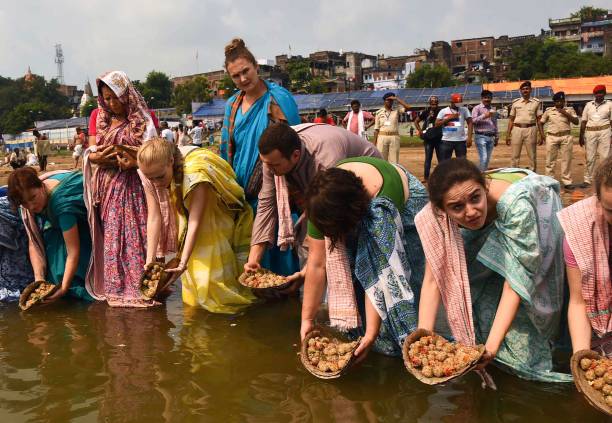
For many individuals, navigating the terminology of Hindu ancestral rites can feel overwhelming. Words like Shraddha, Tarpan, and Pind Daan are often used interchangeably in daily conversations. Family elders might say they are going to perform "Shraddha," while the priest asks them to prepare for "Pind Daan," and they find themselves performing "Tarpan" at the riverbank.
While these terms are closely related and form parts of the same spiritual ceremony, they represent distinct components of Vedic ancestral science. Each has a specific scriptural definition, serves a unique spiritual purpose, and is performed at different times.
Understanding the difference between Shraddha vs Pind Daan and Tarpan is essential to execute these rituals with correct intent (Sankalp), ensuring your ancestors receive the exact energy and nourishment they need.
1. Shraddha: The Comprehensive Umbrella
Shraddha is the overarching, comprehensive term for the entire ceremony performed to honor, satisfy, and liberate departed ancestors.
### Definition
The word Shraddha is derived from the Sanskrit root Shraddha ( श्रद्धा ), which means "faith, devotion, or reverence." Therefore, Shraddha literally means "an act performed with absolute faith and devotion." It is a complete Vedic sacrament (Samskara) that encompasses multiple sub-rituals.
### Purpose and Significance
The primary purpose of Shraddha is to help the departed soul make the transition from the state of a wandering spirit (Preta) to that of a settled, divine ancestor (Pitru).
According to Hindu cosmology:
Immediately after death, a soul remains in a transition state (Preta*) for one year, experiencing spiritual hunger and disorientation.
The annual and periodic Shraddha ceremonies provide the soul with the necessary spiritual energy (Prana) to complete its journey to the ancestral realm (Pitru Loka*).
* Shraddha is also a way for descendants to repay the Pitru Rin (ancestral debt) — the biological and spiritual debt we owe our ancestors for our physical bodies, family name, and lineage assets.
### When is it Performed?
Annual Shradh (Tithi Shradh): Performed every year on the exact Hindu lunar date (Tithi*) of the parent's or ancestor's passing.
* Pitru Paksha: The sacred 15-day fortnight in September–October where all ancestors are honored.
* Amavasya: Performed monthly on the new moon day.
2. Tarpan: Quenching Ancestral Thirst (Spiritual Hydration)
Tarpan is the water offering component of the ancestral rites. It is usually the first ritual performed during a Shradh ceremony.
### Definition
The word Tarpan comes from the Sanskrit root Trup ( तृप् ), which means "to satisfy, please, or quench." Tarpan literally means "the act of satisfying or quenching the thirst of the divine, sages, and ancestors."
### Purpose and Significance
Ancestors in the spiritual realms do not possess physical bodies, but they retain their subtle senses, experiencing intense spiritual thirst. Water is the primordial element representing consciousness and life.
The Offering: During Tarpan, water is mixed with black sesame seeds (Kala Til), barley (Jau*), milk, and flowers.
The Bridge: The performer wears a ring made of Kush grass (Pavitri) and pours the water over the right thumb (the Pitru Teertha* part of the hand) while chanting the gotras and names of the ancestors.
* The Effect: Chanting the ancestral lineage acts as a psychic bridge, transferring the spiritual frequency of the water directly to the ancestors, quenching their thirst and bringing immediate peace.
### When is it Performed?
As a Daily Practice: Many orthodox Hindus perform simple water tarpan (Pitru Tarpan*) daily during their morning prayers.
* During Shraddha: It is the mandatory opening phase of any Shradh ceremony.
* On Monthly Amavasya & Sankranti: Offered on new moon days and solar transition days.
For more details on the procedure, read The Power and Benefits of Tarpan.
3. Pind Daan: Providing Nourishment and Body (Spiritual Nutrition)
Pind Daan is the food offering component of the ritual, involving the creation and dedication of solid food balls.
### Definition
The word Pind refers to a round, spherical ball — representing the physical body, the universe, or a concentrated mass of elements. Daan means "to donate or offer." Together, Pind Daan means "offering a physical body/nourishment to the ancestors."
### Purpose and Significance
If Tarpan is ancestral hydration, Pind Daan is ancestral nutrition.
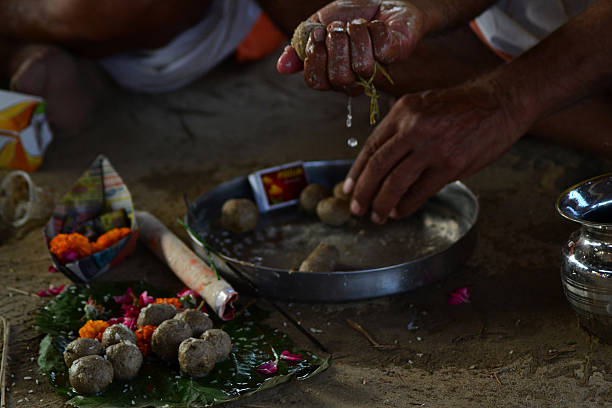
* The Materials: The Pindas are shaped from cooked rice or barley flour mixed with sesame seeds, honey, ghee, and milk.
The Science: The round shape of the Pinda represents the physical body of the ancestor. By offering these pindas, the descendant symbolically reconstructs a body for the wandering soul, allowing it to transition out of the formless, painful Preta* state.
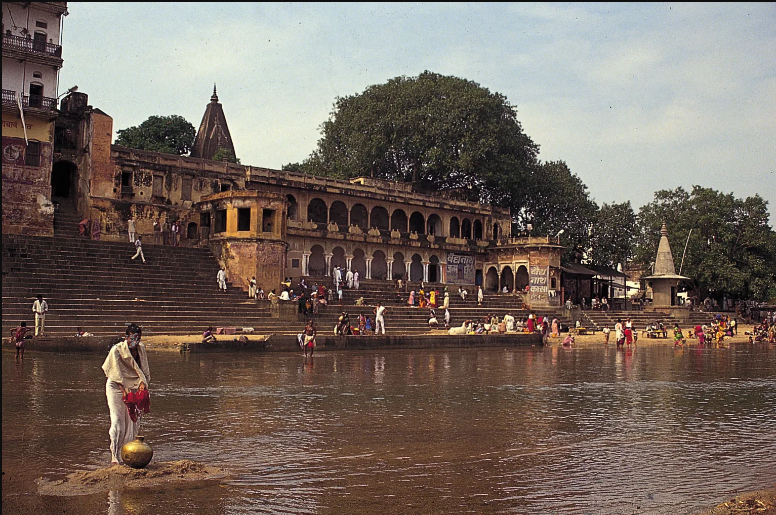
* The Locations: Pindas are placed on sacred ground (such as the sandbeds of the Falgu River or Lord Vishnu's footprint at Vishnupad Temple) under the recitation of powerful Vedic mantras.
The Release: The touch of Lord Vishnu's footprint (Vishnu Pada) during Pind Daan acts as a spiritual solvent, dissolving the ancestor's remaining karmic ties (Karma Bandhana) and granting them final liberation (Moksha*).
### When is it Performed?
* Once in a Lifetime (Gaya Pind Daan): While annual Shradh includes small Pind offerings, a comprehensive, complete Pind Daan is traditionally performed as a one-time pilgrimage to Gaya, Bihar, which scripturally guarantees permanent ancestral satisfaction.
* During Pitru Paksha Mela: The peak season for making these offerings in Gaya.
* At Death Anniversaries: As part of the annual Shradh ritual.
Summarizing the Difference: Shraddha vs Pind Daan vs Tarpan
To make these distinctions clear, let us look at a comparative breakdown of the three terms:
| Feature | Shraddha | Tarpan | Pind Daan |
| : | : | : | : |
| Scope | The entire, overarching ritual ceremony. | A sub-ritual focused on water offerings. | A sub-ritual focused on solid food offerings. |
| Sanskrit Root | Shraddha (Faith and devotion) | Trup (To quench or satisfy) | Pind (Spherical body) + Daan (Offer) |
| Offering Material | Vows, prayers, dakshina, and food. | Water, black sesame seeds, milk, barley. | Cooked rice, barley flour, honey, ghee. |
| Primary Goal | Transition the soul from spirit (Preta) to ancestor (Pitru). | Quench the spiritual thirst of the ancestors. | Provide spiritual nutrition and dissolve karmic chains. |
| Physical Action | Taking vows, reciting genealogies, feeding priests. | Pouring water over the thumb (Pitru Teertha). | Forming round food balls and placing them on sacred spots. |
| Frequency | Annually, or once-in-a-lifetime in Gaya. | Daily, monthly, or during Shradh. | Once-in-a-lifetime (Gaya) or during annual Shradh. |
How They Work Together: The Flow of a Gaya Ritual
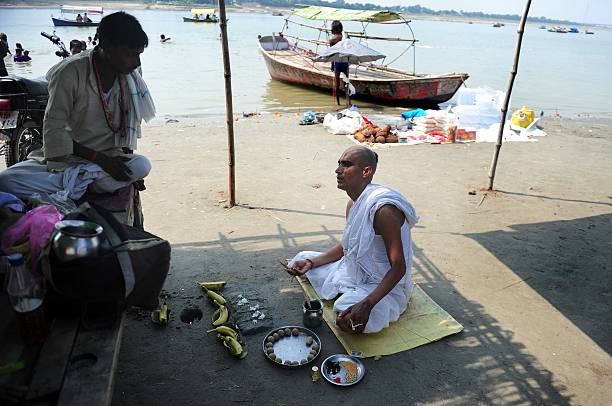
When you book an ancestral ceremony in Gaya, you do not choose between these rituals. They are performed in a beautiful, structured sequence to form a complete, harmonious path of ancestral satisfaction:
```
[Purification Bath at Falgu River]
│
▼
[Tarpan (Water Libations) at Ghats] ──► (Quenches ancestral thirst)
│
▼
[Sankalp (Sacred Vow of Gotra)] ──► (Registers lineage connection)
│
▼
[Pind Daan (Rice Ball Offerings)] ──► (Provides spiritual nutrition)
│
▼
[Brahmin Bhojan (Feeding Priests)] ──► (Seals the offerings physically)
```
1. Purification: The pilgrim bathes in the Falgu River to purify the body.
2. Tarpan: Water mixed with sesame seeds is offered to hydrate the ancestors.
3. Pind Daan: Cooked rice/barley balls are offered at the Falgu River, Vishnupad Temple, and Akshay Vat to nourish and liberate the ancestors.
4. Brahmin Bhojan: Feeding the local Gayawal Pandas completes the physical circuit of the ritual, transmitting the satisfaction to the ancestors.
Frequently Asked Questions
### Q: Can I perform Tarpan without doing Pind Daan?
A: Yes. Simple water Tarpan can be performed daily at home during morning prayers without Pind Daan. However, for a complete annual death anniversary or for the pilgrimage to Gaya, both Tarpan and Pind Daan must be performed together to constitute a complete Shraddha.
### Q: Why is Gaya Pind Daan considered a one-time ritual?
A: Unlike annual Shradh performed at home, Gaya is blessed by a specific scriptural boon. According to the Vayu Purana, placing Pindas on the footprint of Lord Vishnu at the Vishnupad Temple provides permanent, eternal satisfaction to the ancestors, ending their cycle of transition and making future mandatory annual Shradh redundant for those specific souls.
### Q: What is the significance of sesame seeds in both Tarpan and Pind Daan?
A: Black sesame seeds (Kala Til) have a high spiritual capacity to absorb negative energies and act as a conductor for Vedic mantras, ensuring that the prayers reach the ancestral plane without interference from negative spirits.
Conclusion: Honor Your Lineage with Correct Understanding
Understanding the relationship of Shraddha vs Pind Daan and Tarpan allows you to participate in ancestral rites with deep mental clarity and spiritual presence. Tarpan hydrates, Pind Daan nourishes, and Shraddha is the complete act of faith that releases your lineage from karmic blockages.
At Gaya Rituals, our experienced coordinators and Gayawal Pandits guide you through each of these steps with absolute scriptural discipline, ensuring that every drop of water and every grain of rice is offered with authentic Vedic protocols.
Ready to fulfill your duties to your ancestors in Gaya?
Book Your Ritual Now | Consult a Coordinator on WhatsApp | Read the Complete Step-by-Step Guide
Speak With Coordinator
Receive gotra-specific advice and customized pricing guidelines for Gaya rituals.
Related Articles
Gaya Rituals Promise
- ✓100% scriptural guidance under Vedic Acharyas.
- ✓Complete price transparency with zero hidden dakshina.
- ✓Respectful support for elderly & NRI families.