
Why is Gaya the Most Sacred Place for Ancestor Rituals? Mythology, Science & Faith
Discover why Gaya in Bihar is scripturally declared the single most powerful place for Pind Daan. From the legend of Gayasur to Lord Vishnu's boon — the complete story behind Gaya's divine significance.
Introduction: Why Does Every Hindu Family Want to Go to Gaya?
Ask any Hindu family that has lost a parent or grandparent, and there is one pilgrimage that comes up repeatedly in conversations — Gaya. A relatively small city in Bihar, India, Gaya carries a weight in Hindu spiritual tradition that far exceeds its geographic size. People travel from across India, from the United States, United Kingdom, Canada, Australia, Singapore, and the Middle East — all to perform a single ritual: Pind Daan.
But what makes Gaya so unique? Why can't the same ritual be performed at Varanasi, Haridwar, or Prayagraj? What is the actual scriptural basis for this pilgrimage?
This article answers those questions completely — from the ancient mythology to the precise scriptural references to the living spiritual geography of Gaya that makes it unlike any place on earth.
The Story of Gayasur: Where It All Begins
The power of Gaya is rooted in one of the most fascinating and spiritually layered myths in the Hindu tradition — the story of Gayasur, the righteous demon.
### Who Was Gayasur?
Gayasur was an Asura (demon) of extraordinary power and — unusually for a demon — extraordinary virtue. Unlike most Asuras in Hindu mythology who pursued power to challenge the gods, Gayasur directed his energy toward the most intense spiritual austerities (tapas) imaginable. He meditated, fasted, and prayed continuously for thousands of years — all directed toward a single goal: to attain the grace of Lord Vishnu.
Moved by Gayasur's devotion, Lord Vishnu appeared before him and asked what he desired.
Gayasur's request was extraordinary:
> "Lord, grant me this boon — that my body becomes the holiest ground on earth. Let any soul who touches my body, or for whom rites are performed upon my body, be instantly liberated from the cycle of death and rebirth."
Lord Vishnu granted the boon.
### The Unintended Consequence — Heaven Gets Overcrowded
As word spread of Gayasur's boon, the effects were immediate and dramatic. People from all over the world — sinners, wrongdoers, those with heavy karmic debts — began flocking to touch Gayasur's body. Every person who touched him was instantly cleansed and admitted directly into Vaikuntha, the celestial realm of Lord Vishnu.
Heaven began to overflow.
The celestial beings (Devas) became alarmed. The natural law of karma — which ensures that souls progress spiritually through their actions over multiple lifetimes — was being bypassed completely. They approached Lord Vishnu with their concern.
### Lord Vishnu Pins Gayasur to the Earth
Lord Vishnu devised a plan. He approached Gayasur and asked him to lie flat on the ground, offering himself as a sacrificial platform for a great Yajna (fire ceremony). Gayasur agreed willingly, lying down with his head toward the north and his feet toward the south.
As Gayasur lay flat, Lord Brahma and the other Devas began the Yajna ceremony. To prevent Gayasur's body from shifting during the rites, Lord Vishnu placed his divine foot on Gayasur's chest — and pressed him deep into the earth.
Gayasur felt the weight of Vishnu's foot upon his chest. It was the most divine moment of his existence.
From beneath the earth, Gayasur made one final request:
> "O Lord, you have blessed my body for eternity. Now I ask — let this spot remain forever the most powerful place for ancestral salvation. Let those who perform Pind Daan and Shradh here be guaranteed that their ancestors are liberated — permanently. Not just for a year, not just for a generation, but forever."
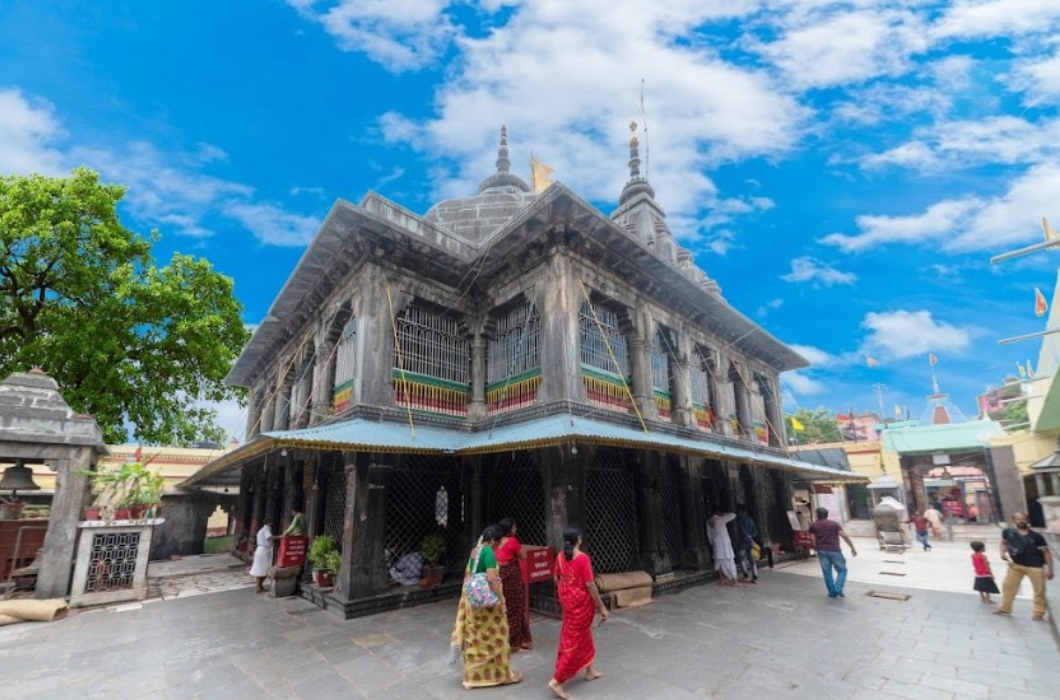
Lord Vishnu agreed. The footprint remained. The city of Gaya was established. The Vishnupad Temple was built around the exact spot where Lord Vishnu's foot touched the earth.
What the Scriptures Say About Gaya
The Gayasur legend is not just oral tradition. It is thoroughly documented in multiple canonical Hindu texts:
### The Vayu Purana (Chapters 77–84)
The Vayu Purana dedicates an entire section — called the Gaya Mahatmya ("Greatness of Gaya") — to describing the spiritual significance of Gaya. It declares:
> "A person who performs Pind Daan in Gaya liberates his ancestors from the moment of the ritual — for all past generations without exception. The liberated souls proceed directly to Vaikuntha and are never born again in a lower realm."
### The Garuda Purana
The Garuda Purana, one of the 18 Mahapuranas narrated by Lord Vishnu to Garuda (the divine eagle), contains detailed instructions for performing Pind Daan. It specifically states that the rites performed in Gaya at the Falgu River, Vishnupad Temple, and Akshay Vat yield ten times the merit of the same ritual performed elsewhere.
### The Mahabharata (Vana Parva, Chapter 95)
The Mahabharata records that Yudhishthira (the eldest Pandava) asked the sage Pulastya about the most sacred pilgrimage sites for ancestor liberation. Pulastya's answer placed Gaya at the very top of his list, saying:
> "At Gaya, the rites performed for ancestors bear fruit that is inexhaustible. Whatever is offered here — pinda, water, sesame, or even just flowers — reaches the ancestors without fail."
### The Ramayana (Lord Rama's Visit)
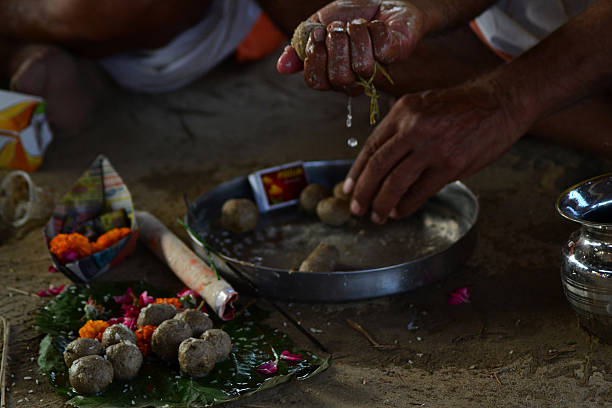
In the Ramayana, Lord Rama, Sita, and Lakshmana visited Gaya specifically to perform Pind Daan for Rama's father, King Dasharatha. According to this account, as Rama was still gathering materials for the ritual, Sita went ahead and offered sand pindas directly on the banks of the Falgu River. King Dasharatha's soul appeared and accepted the offering from Sita's hands — proving that the soil of Gaya itself is sacred enough to transmit offerings.
This story also explains why the Falgu River appears dry (as sand) for most of the year — it is believed to flow underground, keeping its waters hidden as a form of spiritual withdrawal after the incident.
The Three Sacred Pillars of Gaya's Power
The spiritual geography of Gaya is not spread across the entire city. It is concentrated in three specific locations — known as the Three Core Vedis — which together form the complete arc of ancestral liberation:
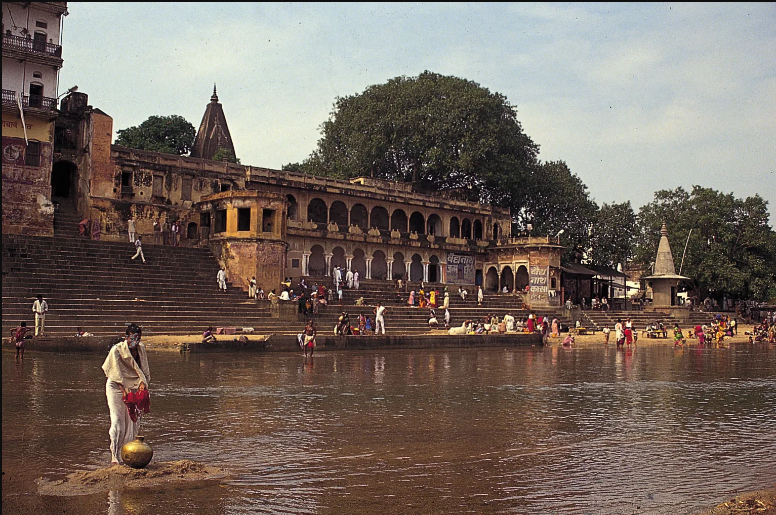
### 1. Falgu River (Phalgu Nadi)
The Falgu River is the first and most fundamental sacred site. This is where:
- Sita offered sand pindas for King Dasharatha
- Lord Rama performed Tarpan (water libations)
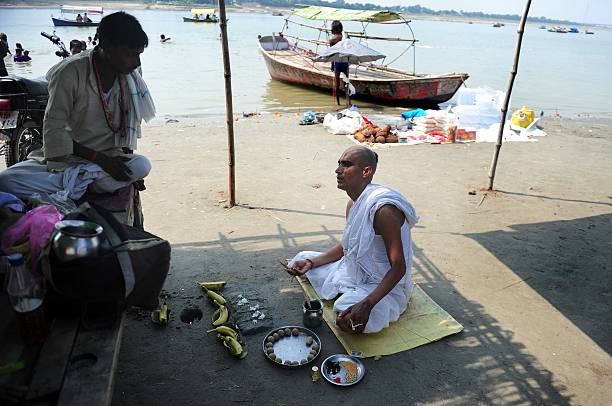
- Millions of families begin their ancestral ritual with the sacred bath (Snan) and water offerings
Even when the river appears as a dry sandbed, Gayawal Pandas guide devotees to dig a small pit in the sand, through which water seeps up — the "invisible flow" of the sacred river.
### 2. Vishnupad Temple
At the heart of Gaya stands the Vishnupad Temple — a massive granite structure built in 1787 by Maharani Ahilyabai Holkar of Indore. Inside its innermost sanctum, embedded in basalt stone, is the 40-centimeter footprint of Lord Vishnu — the exact spot where he stood when he pinned Gayasur into the earth.
Placing Pindas directly on this footprint is the most spiritually potent act of the entire Pind Daan ceremony. It is believed that the touch of Vishnu's footprint instantly dissolves the remaining karmic chains of the ancestral soul, granting it direct passage to Vaikuntha.
### 3. Akshay Vat — The Immortal Banyan Tree
Located within the Vishnupad Temple complex is the Akshay Vat — a Banyan tree that is literally thousands of years old and considered immortal. Akshaya means "that which never diminishes." Offerings made under this tree are believed to carry Akshaya Phal — merit that is permanent and never exhausted.
The final offering of Pindas is made under this tree, "sealing" the ritual and ensuring that the merit generated cannot be reversed or diminished by future karmic forces.
Why Gaya is Superior to Other Pilgrimage Sites for Ancestor Rites
A common question families ask: "Can't we just perform Shradh in Varanasi or Haridwar? Why must we go to Gaya specifically?"
The answer lies in the nature of the boon itself:
| Sacred Site | Spiritual Focus | Permanence of Ancestor Liberation |
|-|-|-|
| Gaya | Permanent Moksha for ancestors | ✅ One-time ritual — permanent liberation |
| Varanasi (Kashi) | Dying in Kashi grants liberation | ⚠️ For the person who dies there, not ancestors |
| Haridwar / Rishikesh | Immersion of ashes in Ganga | ⚠️ Aids soul's journey but doesn't guarantee liberation |
| Prayagraj (Sangam) | Powerful for Shradh | ⚠️ Very auspicious, but annual rites still recommended |
| Nashik (Godavari) | Ancestral rites | ⚠️ Regional importance, not scriptural supremacy |
The key distinction is the Gayasur boon — a specific, divine guarantee that does not apply to any other location. No other pilgrimage site carries a scriptural promise of permanent ancestral liberation equivalent to what was granted to Gaya.
The Living Tradition: Gayawal Pandas — Guardians of Family Lineages
One of the most unique aspects of Gaya is its community of Gayawal Pandas — hereditary priests who have maintained ancestral records for Hindu families for over 1,000 years.
Unlike priests at other temples who perform generic rituals, each Gayawal Panda:
- Maintains a physical Bahi Khata (family registry book) that records the names, gotras, and ritual histories of specific families
- Has the exclusive right to perform rituals for families registered in his lineage
- Can verify whether your family has performed Pind Daan before by consulting the registry
This system ensures that when you visit Gaya, the ritual is not generic — it is personalized to your exact lineage, your ancestors by name, and your family's generational history. This is a living tradition that is unparalleled anywhere in the world.
Why Pitru Dosha Makes Gaya Even More Critical
Pitru Dosha is a karmic condition recorded in a person's birth horoscope (Kundali) when their ancestors are in a state of spiritual unrest. It manifests as:
- Repeated delays or failures in career advancement
- Persistent financial instability despite hard work
- Delayed marriage or relationship problems
- Health issues passing down through generations
- Absence of children or complications in childbirth
Astrologically, Pitru Dosha occurs when the Sun, Moon, Rahu, or Ketu occupy specific positions in the 9th house (house of father and ancestors) of the birth chart.
The permanent solution prescribed in all Vedic texts is clear: Perform Pind Daan in Gaya. The reason Gaya specifically resolves Pitru Dosha (and not just any Shradh location) is because only at Gaya can the ancestral soul be liberated from its state of restlessness — permanently — through the grace of Lord Vishnu, ending the karma that was being transmitted to the living descendants.
Frequently Asked Questions
### Q: Does performing Pind Daan in Gaya mean I don't need to do annual Shradh anymore?
A: The Gaya Shradh is traditionally a one-time ritual that gives permanent satisfaction to ancestors. After performing Pind Daan in Gaya, the need for annual Shradh is considered fulfilled for those specific ancestors. Many families, however, choose to continue annual remembrance as an expression of love and gratitude — not as a karmic obligation.
### Q: What if my family has never been to Gaya in generations?
A: This is extremely common. Many families have been unable to travel to Gaya for generations due to financial, health, or geographical reasons. The good news is that the obligation is cumulative — you can honor all your ancestors (going back as many generations as you know) in a single visit to Gaya.
### Q: Is Gaya in Bihar safe to visit?
A: Gaya is a well-developed pilgrimage city with good hotels, restaurants, hospitals, and transport infrastructure. The city is fully administered and safe for families, elderly visitors, and international travelers. The nearest airport is Gaya International Airport (GAY), which has direct flights from Delhi, Kolkata, and several other cities.
### Q: Can I perform Pind Daan online if I cannot travel to Gaya?
A: Yes. Our Online Pind Daan service connects you via live HD video stream. Our verified Gayawal Pandits perform the complete ritual at the Falgu River, Vishnupad Temple, and Akshay Vat in your name and Gotra while you participate and witness live. Prasad is shipped to your address anywhere in India or internationally.
Conclusion
Gaya is not sacred by tradition alone. It is sacred by a specific divine promise — the boon of Gayasur, sealed by the foot of Lord Vishnu — that is recorded in multiple canonical Hindu scriptures and has been honored by visiting dignitaries from Lord Rama to the Pandavas to millions of ordinary families across thousands of years.
When you perform Pind Daan in Gaya, you are not simply following a ritual. You are fulfilling a sacred contract — one that guarantees your ancestors the liberation they deserve, resolves your own Pitru Dosha, and brings peace, prosperity, and divine blessings to your entire lineage for generations to come.
Ready to perform Pind Daan for your ancestors?
Book Your Ritual Now | Talk to a Coordinator | Read the Step-by-Step Guide
Speak With Coordinator
Receive gotra-specific advice and customized pricing guidelines for Gaya rituals.
Related Articles
Gaya Rituals Promise
- ✓100% scriptural guidance under Vedic Acharyas.
- ✓Complete price transparency with zero hidden dakshina.
- ✓Respectful support for elderly & NRI families.